
%月 %日, %年 4 读

SUPER KITTY CATS BLOG • FELINE BEHAVIOR & CARE

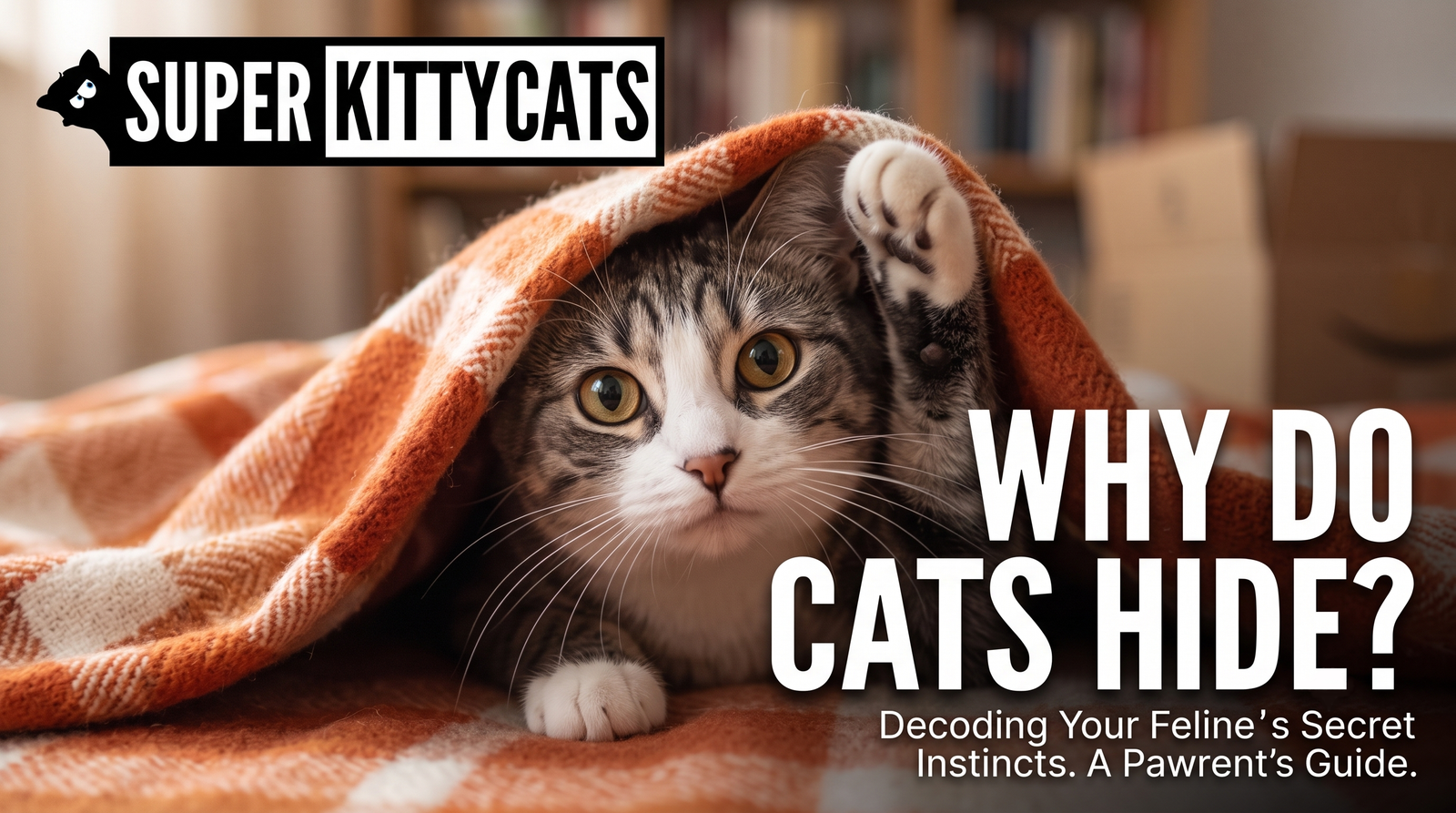
Why Do Cats Hide?
What Every Pawrent Should Know About Feline Instincts

From innate survival tactics to subtle cries for help, discover why your furry friend vanishes into thin air and how to support their wellbeing.

Cats love to hide! Those adorable tiny balls of fluff are known for thinking they can disappear into thin air by just ducking into a cozy corner. While our feline companions seem to hold that kind of magic, they aren't just hiding for no reason. Is hiding normal for them—or is there something else going on?

The majority of cats have an instinct to seek shelter. It is their first line of defense against a big, noisy world. Hiding makes them feel safe, warm, and secure. Let’s look at the primary reasons why cats hide, where they go, and how you can help your furry friend stay comfortable!

4 Main Reasons Why Cats Hide

1. Stress and Anxiety

TRIGGERS Loud noises, new guests, sudden moves
BEHAVIOR LEVEL High
RECOMMENDED ACTION Provide a quiet, undisturbed safe space

It is a natural response for a cat to hide when anxious—they are simply trying to keep away from perceived danger. Usually, this hiding behavior goes away as they begin to settle down. However, if your furry friend suddenly starts spending the majority of their day hidden away from everyone, it is time to look closer at what might be disturbing them.

• Expert Tip: Never drag an anxious cat out from under furniture; forcing interaction escalates stress and damages trust.

📸 Image 1: A timid cat peeking out nervously from behind a wooden bookshelf or sofa in a soft-lit indoor setting.

2. Warmth and Comfort

TRIGGERS Cold weather, nap time
BEHAVIOR LEVEL Normal
RECOMMENDED ACTION Provide plush, insulated beds

Cats naturally prefer warm environments, and small, tight spaces help retain their body heat. Given that cats spend so much of their day sleeping, it makes total sense that they would seek out a snug, private nook to snooze safely!

📸 Image 2: A cozy cat curled up sleeping peacefully inside a soft fabric dome bed or warm blanket fold.

3. Health Issues & Pain

TRIGGERS Illness, physical pain, discomfort
BEHAVIOR LEVEL Critical / Warning
RECOMMENDED ACTION Schedule a veterinary evaluation

When felines feel sick or hurt, their survival instinct tells them to hide to reduce vulnerability. If your cat unexpectedly begins hiding and stops eating, drinking, or visiting the litter box, consult your veterinarian right away for a health checkup.

• Expert Check: Sudden, persistent hiding is often one of the earliest signs of feline lower urinary tract disease (FLUTD), dental distress, or systemic pain.

4. Pregnancy and Nesting

TRIGGERS Approaching labor
BEHAVIOR LEVEL Temporary / Hormonal
RECOMMENDED ACTION Set up a quiet nesting box

When an unspayed female cat is preparing to give birth, she will seek out a secluded area. During the final day or two before giving birth, she will search for dark, soft hidden spots to prepare a safe nest for her upcoming kittens.

📸 Image 3: A mother cat with newborn kittens resting comfortably inside a padded nesting enclosure.

Where Do Cats Love to Hide?

If you're wondering where your cat vanished to, start your search by checking out these top favorite feline hideouts:

  • Cardboard Boxes: The classic cat favorite for physical warmth and supreme security!
  • Under Beds & Covers: Dark, quiet spaces that carry their owner's comforting scent.
  • Laundry Baskets: Soft, warm clothes make an ideal insulated bed.
  • Closets & Drawers: Low-traffic corners tucked away from household noise.
  • Behind Appliances: Naturally drawn to ambient heat generated by electronics.

Creating Safe Hiding Sanctuaries for Your Cat

Instead of preventing your cat from hiding, provide safe, dedicated hideaways around your home:

1. Cat Caves & Covered Nooks

A felted wool or fabric cat cave offers a dedicated space where your cat can feel completely enclosed while sleeping, resting, or playing.

2. Cat Trees with Built-in Condos

Cats love high perches! A multi-level cat tower featuring an enclosed condo lets them stay high above the room while having a dark spot to retreat into.

3. Hooded Calming Beds

For extra anxious pets, a hooded or roof-covered calming bed provides surrounding soft pressure that helps them relax, feel secure, and sleep deeply.

Veterinary Insight: When Hiding Signals an Emergency

Hiding is normal and beneficial for a cat's mental health when used as a routine retreat. However, sudden changes in hiding habits are a red flag. Seek veterinary care immediately if hiding is accompanied by:

  • Appetite Loss: Refusal to eat or drink for more than 24 hours.
  • Litter Box Avoidance: Straining, crying, or inability to urinate.
  • Lethargy or Uncharacteristic Aggression: Hissing or growling when gently approached in their spot.

Hiding is a natural, comforting instinct that keeps our beloved felines safe and emotionally balanced. By understanding their subtle signals, offering safe hideaways, and keeping a close eye on their health, you can give your kitty the ultimate sanctuary to thrive.

留个言

张贴前管理员会先审核您的留言